Archiv | Verband der Fährschifffahrt
Aufrufe
05.2024
04.2024
04.2024
04.2024
04.2024
04.2024
04.2024
04.2024
04.2024
04.2024
04.2024
04.2024
04.2024
03.2024
03.2024
03.2024
03.2024
03.2024
03.2024
03.2024
03.2024
03.2024
03.2024
03.2024
03.2024
Sustainability Report 2023: New steps towards carbon-neutral maritime transport and a strengthening of domestic capabilities
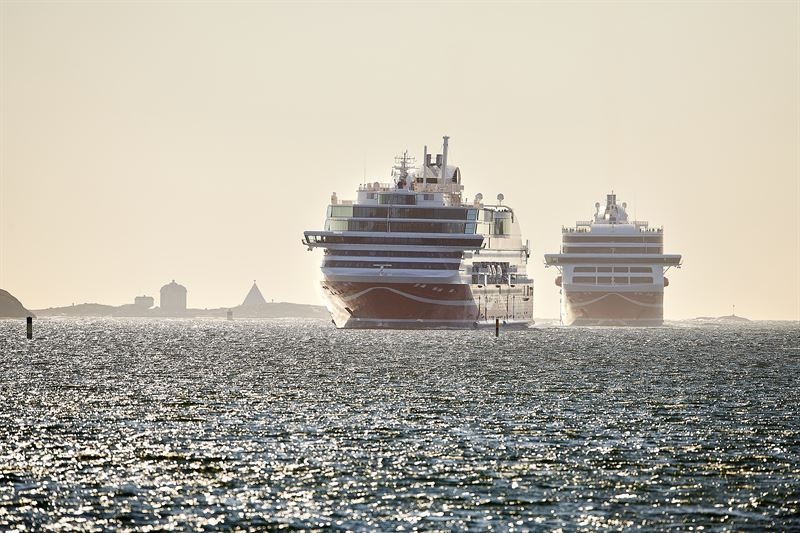
The introduction of biofuel, continuous development of the fleet and investments in Finnish providers were Viking Line’s most significant sustainability measures in 2023. In EPSI Rating’s 2023 customer satisfaction survey for maritime transport, for the second time Viking Line was named the most sustainable company in service between Finland and Sweden.
In June 2023, Viking Line began offering passengers on the Turku route the option of purchasing renewable biofuel to offset their emissions. By choosing biofuel, passengers can reduce emissions from their journey by up to 90 per cent.
“The introduction of biofuel is one example of our long-term climate work and long-term investments. From the very start, we made sure that Viking Glory, which was completed in 2021, and Viking Grace, which was completed in 2013, were built with the technological readiness to use biogas and synthetic fuels produced from renewable energy. There is now enough biogas being produced in the market so that we can start to use this fuel together with liquefied natural gas for these two climate-smart vessels. This is a very important phase in our more than forty-year sustainability journey,” says Viking Line’s Sustainability Manager, Dani Lindberg.
Viking Line started to use green electricity in every port where its vessels are connected to land-based power supply. Using electricity produced from renewable energy forms such as wind power, solar energy and biogas reduces the company’s annual greenhouse gas emissions by up to 780 tonnes. A big reduction in emissions was also achieved with the sale of the oldest vessel in the fleet, M/S Rosella, in January 2023.
Viking Line’s climate work is driven by both passenger demands and more stringent climate standards for the maritime transport industry. In the future, shipping companies will be governed by the EU’s Fit for 55 green transition programme and its emissions trading system as well as the International Maritime Organization’s strategy to reduce greenhouse gas emissions.
“There’s a lot of work to be done, but our sustainability journey is already taking us towards completely fossil-free maritime transport. In the years ahead, green maritime corridors, which we are developing with our partners between Turku and Stockholm as well as between Helsinki and Tallinn, will play a major role. Going forward, strategic partnerships and providing sustainable alternatives to different customer groups will be increasingly important in our sustainability work,” says Dani Lindberg.
Viking Line is Finland’s biggest employer in maritime transport, and supporting the country’s labour and well-being is part of the company’s sustainability work. Viking XPRS, which sails between Helsinki and Tallinn, was removed from the Estonian Ship Register and entered in the Finnish Ship Register in March 2023, and at the same time the vessel’s 175 crew members were transferred to the Finnish payroll system and became direct employees of Viking Line. The same month, the Association for Finnish Work awarded Viking Line its Key Flag Symbol. Viking Cinderella was transferred from the Swedish Ship Register to the Finnish Ship Register in March this year.
Viking Line’s Sustainability Report for 2023 can be found in its entirety here
9 points from Viking Line’s Sustainability Report 2023
- For the second time in a row, Finnish passengers named Viking Line the most sustainable maritime transport company sailing between Finland and Sweden in EPSI Rating’s 2023 customer satisfaction survey for the Finnish maritime transport industry. For the second straight year, the company also topped the sustainability index for passenger transport among companies included in the survey.
- Viking Line is Finland’s biggest employer in the maritime transport industry. In 2023, the company had 2,401 employees, 1,878 of whom lived in Finland. More than 100 million euros was paid in salaries and wages.
- Viking Line is one of Finland’s biggest employers in the entertainment industry.
Thousands of performances by artists are arranged on board the company’s vessels each year. - In 2023, four of Viking Line’s five vessels sailed under the Finnish flag: Viking Glory, Viking Grace, Gabriella and Viking XPRS, which was transferred to the Finnish Ship Register in March 2023. In conjunction with the reflagging, Viking XPRS’s employees were hired directly by Viking Line. In March 2024, Viking Cinderella was also reflagged under the Finnish flag, so now all of the company’s vessels are entered in the Finnish Ship Register.
- The oldest vessel in the fleet, M/S Rosella, which was built in 1980, was sold.
- Viking Line is a partner together with Rauma Marine Constructions, Åbo Akademi and Kempower in the Decatrip project, the aim of which is to develop a solution that enables carbon-neutral maritime transport between Turku and Stockholm. Viking Line signed a memorandum of understanding with the Ports of Stockholm and the Port of Turku to establish a green maritime corridor.
- Viking Line is actively involved in conservation work and research work for the Baltic Sea and nature in its archipelagos. The company supports a number of Finnish environmental organizations, such as the John Nurminen Foundation, the Keep the Archipelago Tidy Association and the Tvärminne Zoological Station.
- The restaurants on board invest in sustainable and locally-sourced food, and nearly 70 per cent of ingredients are of Nordic origin. Large-volume products such as cream, butter, yoghurt, fermented milk and eggs are purchased from Finnish producers and growers.
- Food waste collected on board Viking XPRS, Viking Grace and Viking Glory continues its cycle as raw material for biogas. In 2023, 1,475 tonnes of food waste were collected. That produces about 112,000 cubic metres of biogas, equivalent to 127,000 litres of petrol.
Link to the original press release of Viking Line.
Text & Pictures ©: Viking Line