Archiv | Verband der Fährschifffahrt
Aufrufe
05.2024
05.2024
05.2024
05.2024
05.2024
05.2024
05.2024
05.2024
05.2024
04.2024
04.2024
04.2024
04.2024
04.2024
04.2024
04.2024
04.2024
04.2024
04.2024
04.2024
04.2024
03.2024
03.2024
03.2024
03.2024
Emissions several hundred tonnes lower: Viking Line’s vessels now use green land-based power supply
Starting in 2030, it will be a legal requirement for vessels to use a land-based power supply when they are in port. For Viking Line, this is already an everyday reality, and now the company has also switched to using only green electricity from renewable energy sources. Altogether, this will reduce the company’s annual greenhouse gas emissions by up to 780 tonnes.
As early as the 1980s, Viking Line connected its vessels for the first time to a land-based power supply in the Stockholm city harbour of Stadsgårdshamnen. Since then, links to a land-based power supply have been built in the ports of Mariehamn, Helsinki and Tallinn. In all of these ports, Viking Line has now switched to green electricity produced from renewable energy sources such as wind power, solar energy or biogas.
“Annual carbon dioxide emissions from our vessels are up to 780 tonnes less compared to if the vessels produced electricity using their own engines when in port. Thanks to the land-based power supply, vessel emissions of particulate matter are also reduced significantly, and no noise in the area is produced from their engines,” says Sustainability Manager Dani Lindberg at Viking Line.
Viking Line’s vessels use a land-based power supply on every route except for the Turku route, since the harbour times in Turku, Mariehamn and Stockholm are so short that there is not enough time to connect the vessel to a land-based power supply.
Establishing a land-based power supply is a concerted effort involving the shipping companies and ports since it requires substantial investments from both sides. Over the years, Viking Line has installed facilities to connect to the onshore power supply on all of its vessels that sail from Helsinki to Stockholm or Tallinn, most recently on Viking XPRS in 2021.
“It is gratifying that the ports provide a land-based power supply since the law does not require vessels to use an onshore power supply until 2030. After that time, all vessels in port for more than two hours will have to use a land-based power supply instead of fuel, and the ports will have to make certain that the necessary infrastructure for using such power is in place.”
Large passenger vessels use a great deal of electricity, and an average of 25 per cent of fuel consumed is for producing electricity. Viking Line is therefore investing to reduce electricity consumption on its vessels as part of its drive to systematically reduce total emissions from its vessel fleet.
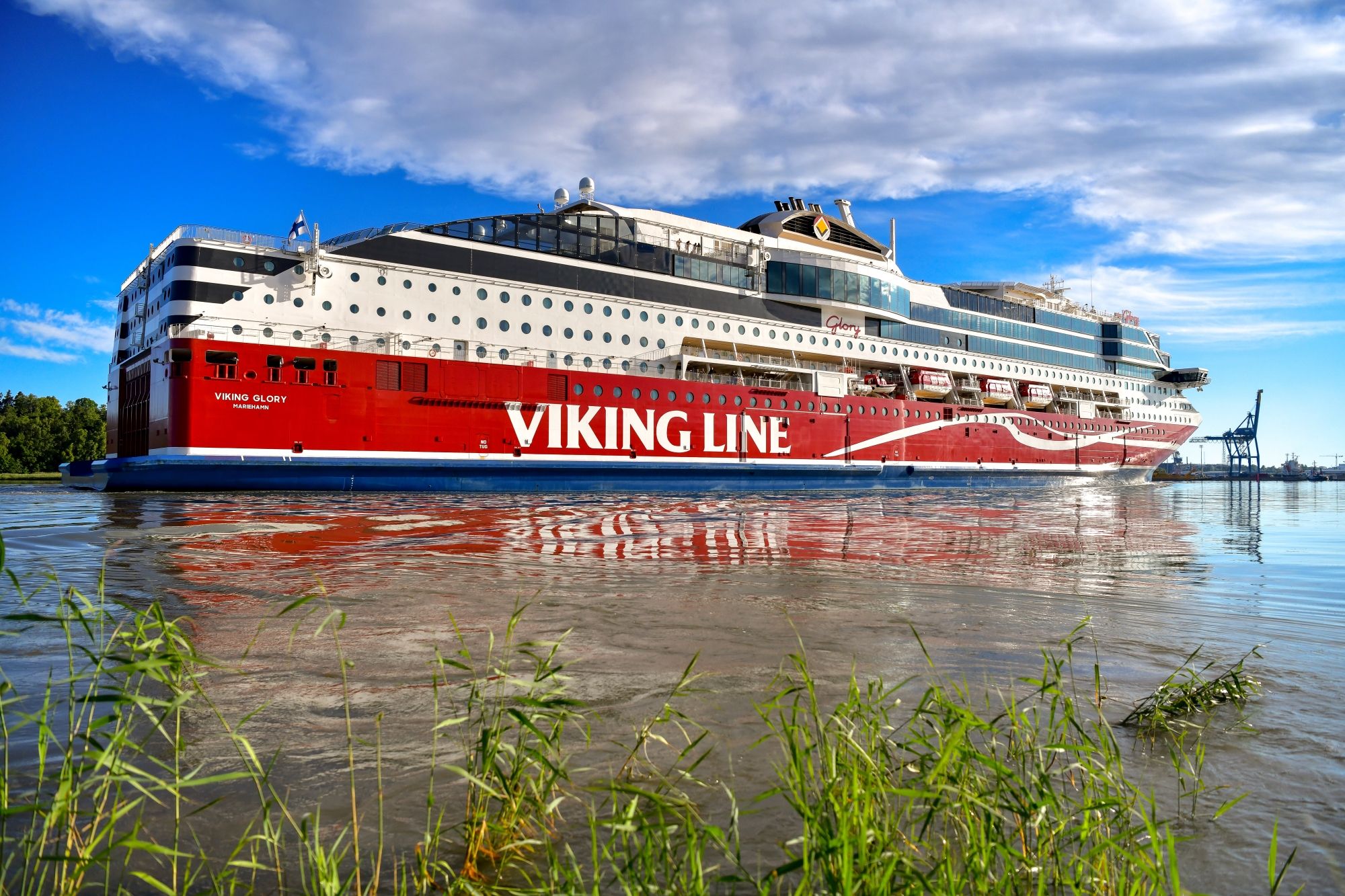
“Thanks to technological innovations, the energy efficiency of our newest vessels is already top-class based on global measurements. For example, Viking Glory has an energy recovery system that converts waste heat from its engines into electricity and uses waste cooling from LNG fuel to cool cooling facilities and cooling spaces. We improve the energy efficiency of all of our vessels over the course of their life cycle by updating and renewing technological solutions, including ventilation systems, in conjunction with routine dry-dockings,” says Dani Lindberg.
Link to the original press release of Viking Line.
Text & Pictures ©: Viking Line