
Archiv | Verband der Fährschifffahrt
Aufrufe
05.2024
05.2024
05.2024
05.2024
05.2024
05.2024
05.2024
05.2024
05.2024
04.2024
04.2024
04.2024
04.2024
04.2024
04.2024
04.2024
04.2024
04.2024
04.2024
04.2024
04.2024
03.2024
03.2024
03.2024
03.2024
Viking Line continues its support for the protection of the Baltic Sea – donations this year will go to three organizations
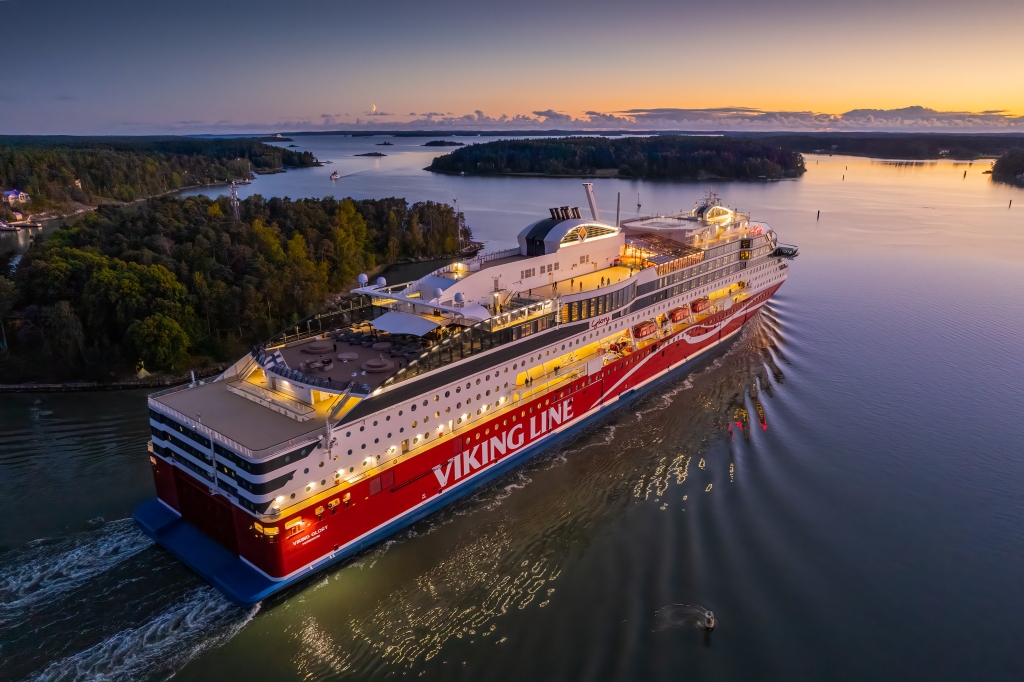
Viking Line continues its long-term support for environmental work in the Baltic Sea region. Once again, the company is making a significant donation this year to three organizations that work to protect the Baltic Sea and the nature in its archipelagos. The funds donated will be used for scientific research on the Baltic Sea, among other things.
This year, Viking Line is providing financial support to the environmental organization Keep the Archipelago Tidy in Finland, Helsinki University’s Tvärminne Zoological Station and the John Nurminen Foundation. The funds donated were raised from the sale of plastic carrier bags on board the vessels.
“The protection of the Baltic Sea is something close to our hearts since our company has its roots in the archipelago and our vessels sail daily through the sensitive natural environments there. We have had long-term collaborations for many years with organizations that promote research on the Baltic Sea and do concrete work to protect the unique nature in this maritime environment. Our shared ambition is to preserve the biodiversity and viability of the sea and its archipelagos,” says Sustainability Manager Dani Lindberg at Viking Line.
Helsinki University’s Tvärminne Zoological Station is the largest research station in Finland that conducts research on the Baltic Sea. Some of its best work involves studying the biodiversity in coastal environments and the links to climate change.
“We are really pleased and grateful that Viking Line has supported our research operations for many years. Nearly all of our research is conducted nowadays with external funding so long-term partnerships are vital to us. With the help of the latest donation, we will continue the work to develop the Monicoast coastal observatory,” says research coordinator Joanna Norkko at the Tvärminne Zoological Station.
In previous years, money donated by Viking Line has been used, among other things, to pay the salary of a researcher in Tvärminne. The research station has also developed a programme for children based on the theme of sea research as well as photo exhibitions with pictures from the world below the surface of the sea for Viking Line’s vessels.
Protecting the Baltic Sea is a crucial part of Viking Line’s sustainability work, which has been under way since the 1980s. The impact of this focused work is seen, for example, in carbon dioxide reductions per nautical mile from Viking Line’s fleet of vessels, which have decreased 30 per cent since 2008.
“We want to continue to strengthen our position as a role model in sustainable maritime transport, so it is a matter of always raising the bar for ourselves. By working together with organizations that protect the Baltic Sea, we can exchange views, learn new things and get ideas. The more organizations that work for a cleaner Baltic Sea, the more effective our work is as well,” says Dani Lindberg.
These environmental organizations receive support from Viking Line
Keep the Archipelago Tidy Association in Finland
The Keep the Archipelago Tidy Association in Finland is a nationwide environmental organization for all boating enthusiasts and others who travel by sea. The association has been working for a cleaner archipelago and cleaner nature since 1969. All operations are aimed at keeping Finnish maritime environments, inland lakes, shores and archipelagos tidy.
Helsinki University: Tvärminne Zoological Station
The Tvärminne Zoological Station is a marine station situated at the entrance to the Gulf of Finland, where research has been carried out for more than 120 years. This is one of three biological research stations that are part of the Faculty of Biological and Environmental Sciences at Helsinki University. Among the research topics pursued at the station is how the Baltic Sea’s coastal environments affect the climate.
John Nurminen Foundation
The John Nurminen Foundation was founded in 1992 to save the Baltic Sea and its cultural heritage for future generations. The foundation’s projects improve the condition of the Baltic Sea through concrete measures that reduce the load on the sea and environmental risks. The foundation has launched 40 environmental projects, 34 of which have been completed.
Viking Line’s environmental journey
1980s
• Viking Line stops using toxic paint for the bottoms of its vessels, and divers start using brushes to clean the vessel bottoms.
• Recycling waste on board the vessels starts.
• First land-based power supply is placed in service in Stockholm. A land-based power supply is now also used in Helsinki, Mariehamn and Tallinn.
1990s
• The switch to fuel with low sulphur content reduces sulphur dioxide emissions.
• The wastewater on vessels starts being pumped ashore for treatment.
• Cold seawater starts to be used to cool the air on board the vessels, while the air on board is heated using energy recovered from flue gases.
2000s
• Viking Line is the first shipping company in the world to use Humid Air Motor technology to reduce nitrogen oxide emissions. By using seawater for cooling, the combustion temperature of the vessel’s engines is lowered.
• Nitrogen oxide emissions are reduced on Viking Cinderella when catalytic converters are installed on the vessel.
• Recycling of organic waste starts on board Viking XPRS.
2010s
• The new vessel Viking Grace uses 100% sulphur-free liquefied natural gas (LNG) as fuel. The climate-smart vessel reduces nitrogen emissions by 85% and greenhouse gas emissions by 15% compared to a vessel that runs on oil. Particulate matter emissions are cut to practically zero.
- • Viking Grace tests a rotor sail and thus becomes the world’s first hybrid vessel to use both LNG and wind power. The vessel is equipped with an energy recovery system that converts surplus heat into electricity.
2020s
• Current stabilizers are installed on Viking Gabriella and Viking XPRS, which reduces fuel consumption and carbon dioxide emissions.
• The new vessel Viking Glory is placed in service in March 2022. The vessel’s engines enable optimal fuel utilization and produce no sulphur emissions.
• Thanks to Viking Glory’s Azipod rudder propeller system, the vessel can be smoothly manoeuvred in port, which saves time and fuel. The shape of the vessel’s hull reduces the formation of waves as well as fuel consumption.
• Viking Glory is also a pioneer in utilizing waste cooling from LNG. The energy recovery system generates up to 40% of the electricity the vessel needs for passenger functions.
• On board Viking Glory, the lights are automatically turned off in empty cabins and the ventilation and heating are automatically lowered.
• Viking Line starts offering passengers on Viking Glory and Viking Grace the option of purchasing biogas to carbon-offset their travel and thus reduce their own emissions by up to 90%.
Link to the original press release of Viking Line.
Text & Pictures ©: Viking Line